Case Study
•🏆 Awarded Most User-Centered Design
HABITat
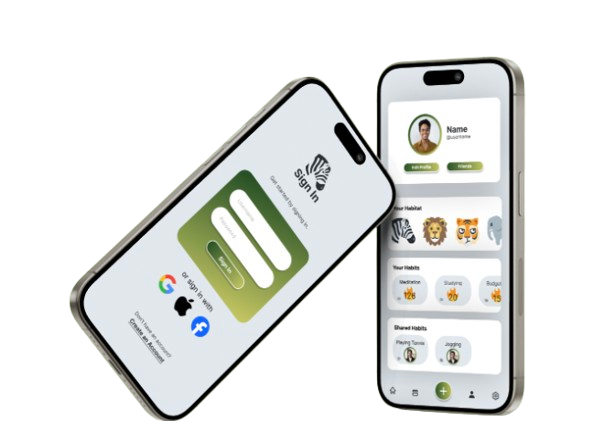
Track your habit, build your habitat. A gamified approach to habit tracking for college students.
Role
UX Designer
Duration
4-Week Sprint
Tools
Figma, FigJam
Team
4 Designers
01
Overview
Most habit tracking apps fail because they lack incentives, rewards, and accountability. What if building habits felt like building something meaningful?
HABITat reimagines habit tracking through gamification. As you maintain your habits, you build a virtual habitat and unlock adorable animal companions. The app combines reward systems with social accountability, making habit-building feel less like a chore and more like nurturing your own little world.
Problem Statement
How might we design an app for college students that tracks their habits in a clear and concise way while keeping them engaged and accountable?
02
Design Process
Research & Discovery
Conducted user surveys with college students, competitive analysis of habit apps, and stakeholder interviews.
Ideation & Concept
Brainstormed concepts with crazy 8s, dot voting, and affinity mapping. Landed on the "habitat building" metaphor.
Wireframing & Testing
Created low-fi sketches, mid-fi wireframes in Figma, and conducted usability testing with real users.
Hi-Fi & Presentation
Polished visual design with safari theme, created interactive prototype, and presented to judges.
03
Research
We surveyed college students to understand their relationship with habit tracking apps and identified the core problem: most users abandon habit apps within weeks due to lack of motivation.
Survey Findings
"What would incentivize you to keep up your habits?"
"What challenges do you face keeping up habits?"
Key Research Insights
Incentivization Gap
Users need tangible rewards and visual progress to stay motivated beyond the first week. Abstract streaks aren't enough.
Social Accountability
Social connections and shared goals create external motivation that self-tracking alone can't provide.
Emotional Rewards
Gamification elements like collecting and achievements tap into intrinsic motivation when done meaningfully.
04
Synthesis
I synthesized survey and interview data through affinity mapping. Three themes emerged that would guide our design:
Incentivization: Visual rewards and progress that create emotional investment.
Accountability: Social features that create external motivation beyond self-discipline.
Engagement: Game-like mechanics that make habit tracking feel rewarding, not tedious.
Incentivization
User Behavior
Stops using habit apps after a few days because progress feels invisible.
Needs / Goals
Wants to see tangible proof that daily habits are leading somewhere meaningful.
Pain Point
Streaks alone don't feel rewarding enough to maintain motivation.
Pain Point
Breaking a streak feels devastating with no way to recover momentum.
UX Principle
Rewards should create emotional attachment, not just acknowledge completion.
Opportunity
Collectible animals that users earn through milestones, creating emotional investment.
Accountability
User Behavior
More likely to complete habits when a friend or partner is involved.
Needs / Goals
Wants external motivation from friends to stay consistent with habits.
Pain Point
Existing apps treat habit tracking as a solo activity with no social connection.
Pain Point
No easy way to share progress or celebrate wins with friends.
UX Principle
Social features should feel supportive, not competitive or judgmental.
Opportunity
Shared habits with friends, gentle reminders, and visible progress sharing.
Engagement
User Behavior
Enjoys games with collection mechanics and progression systems.
Needs / Goals
Wants habit tracking to feel fun and rewarding, not like a chore.
Pain Point
Most habit apps are boring and utilitarian with no personality.
Pain Point
Gamification in existing apps feels forced or disconnected from habits.
UX Principle
Gamification should enhance the habit, not distract from it.
Opportunity
Build a "habitat" that grows with habits—visual progress users care about.
05
User Flows
Four core journeys mapped from research insights
Onboarding
Create Habit
Track & Complete
Shared Habits
06
Prototyping
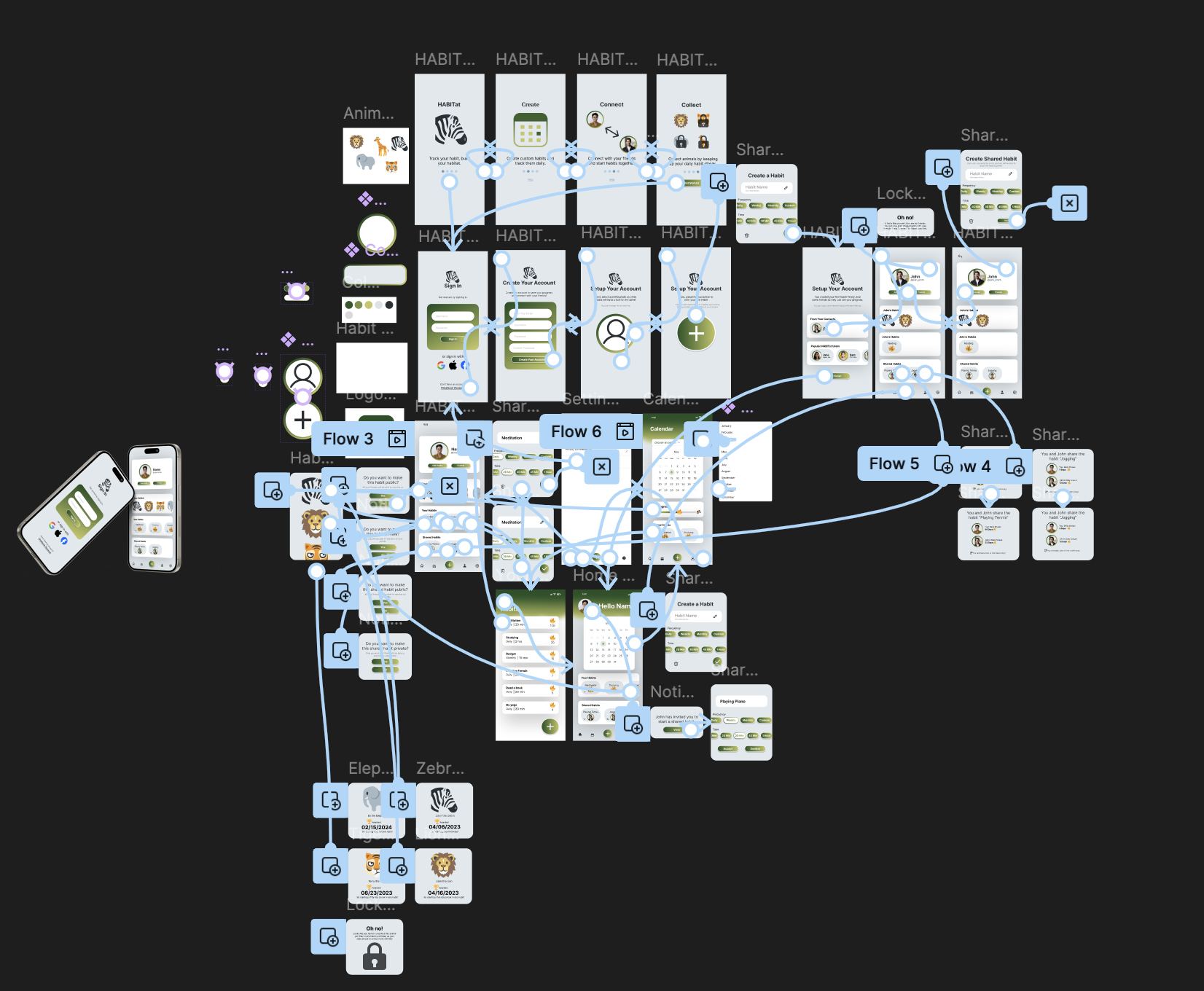
Our comprehensive Figma prototype maps out all user flows, from onboarding to habit tracking, shared habits, and reward unlocking. The prototype includes interactive components for user testing.
07
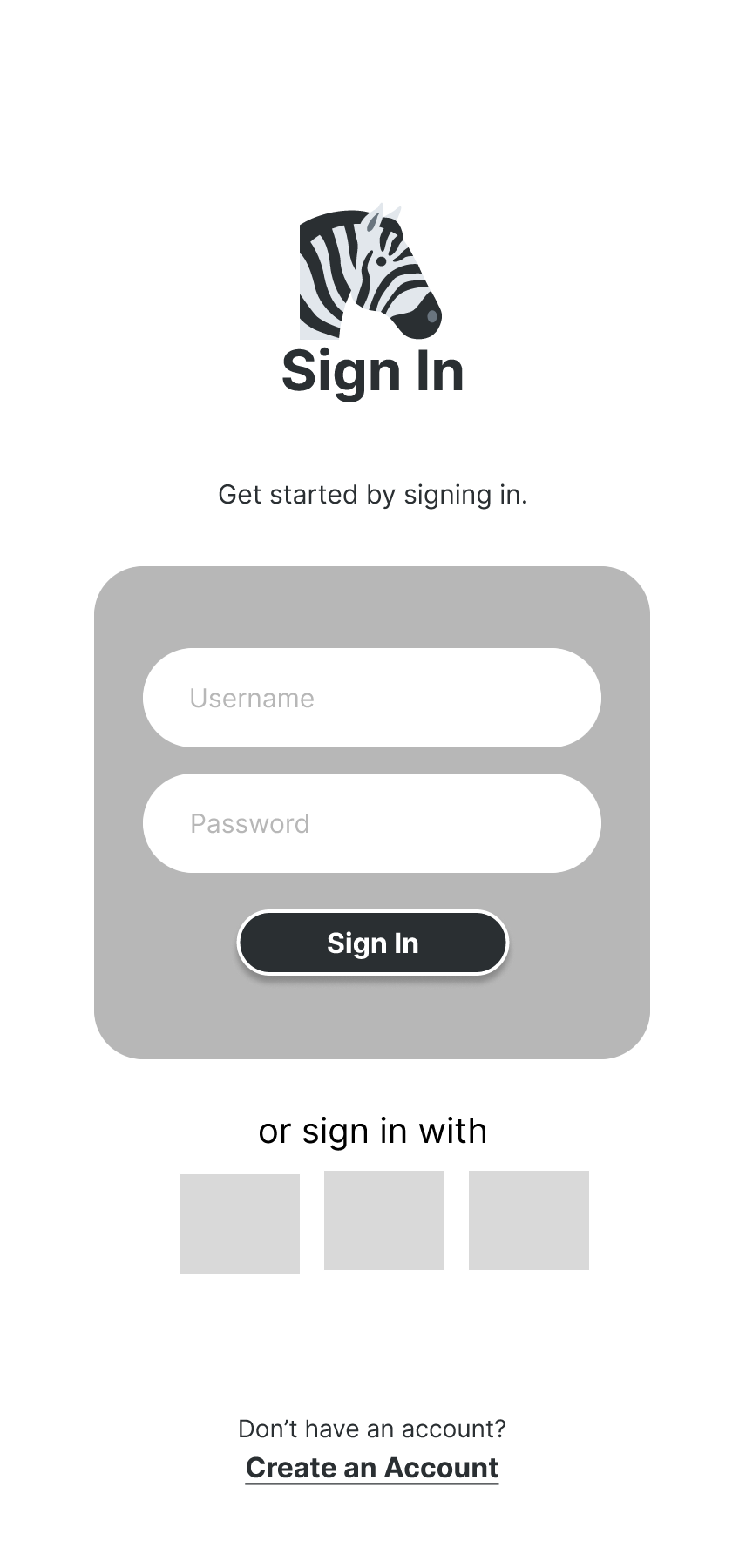
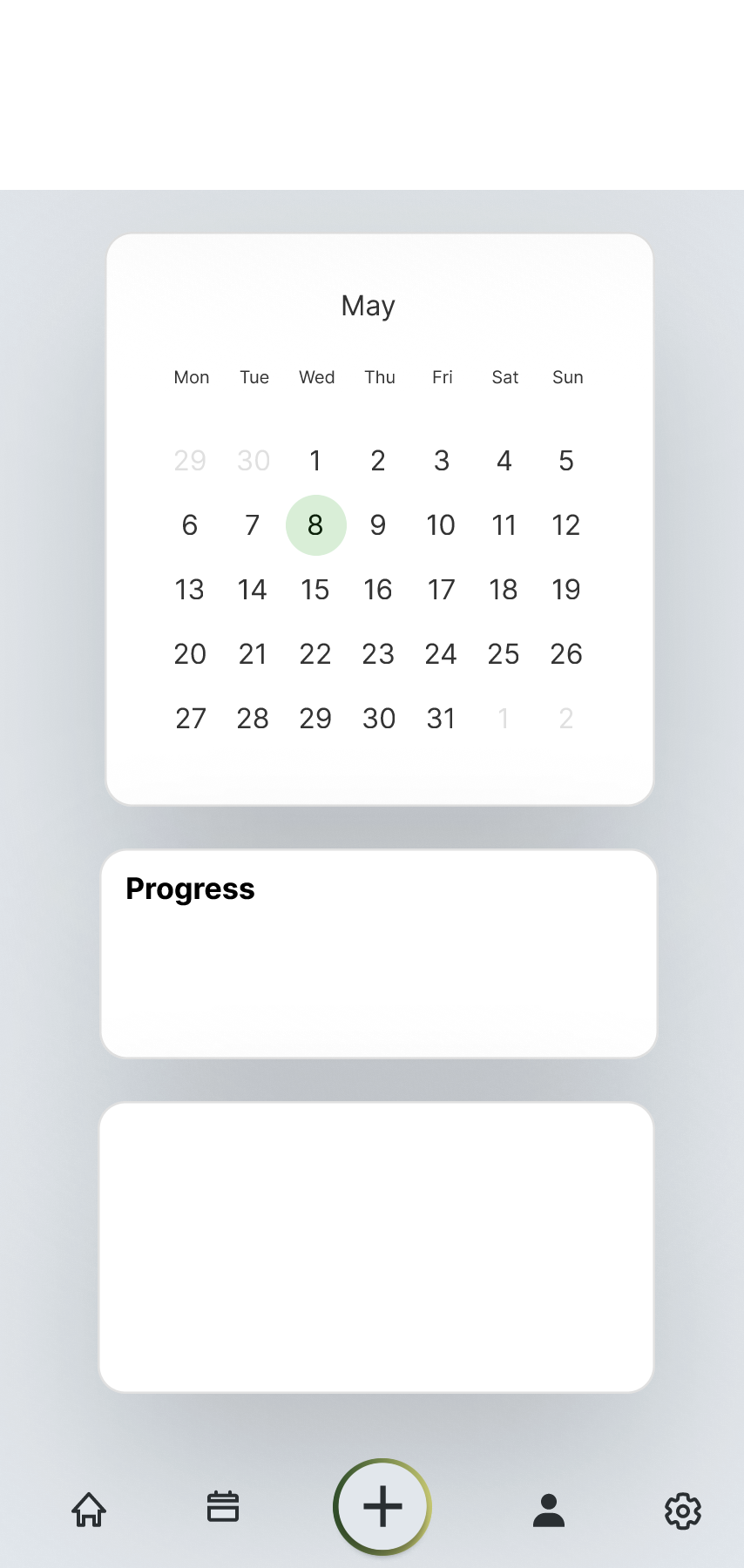
Mid-Fidelity Prototypes
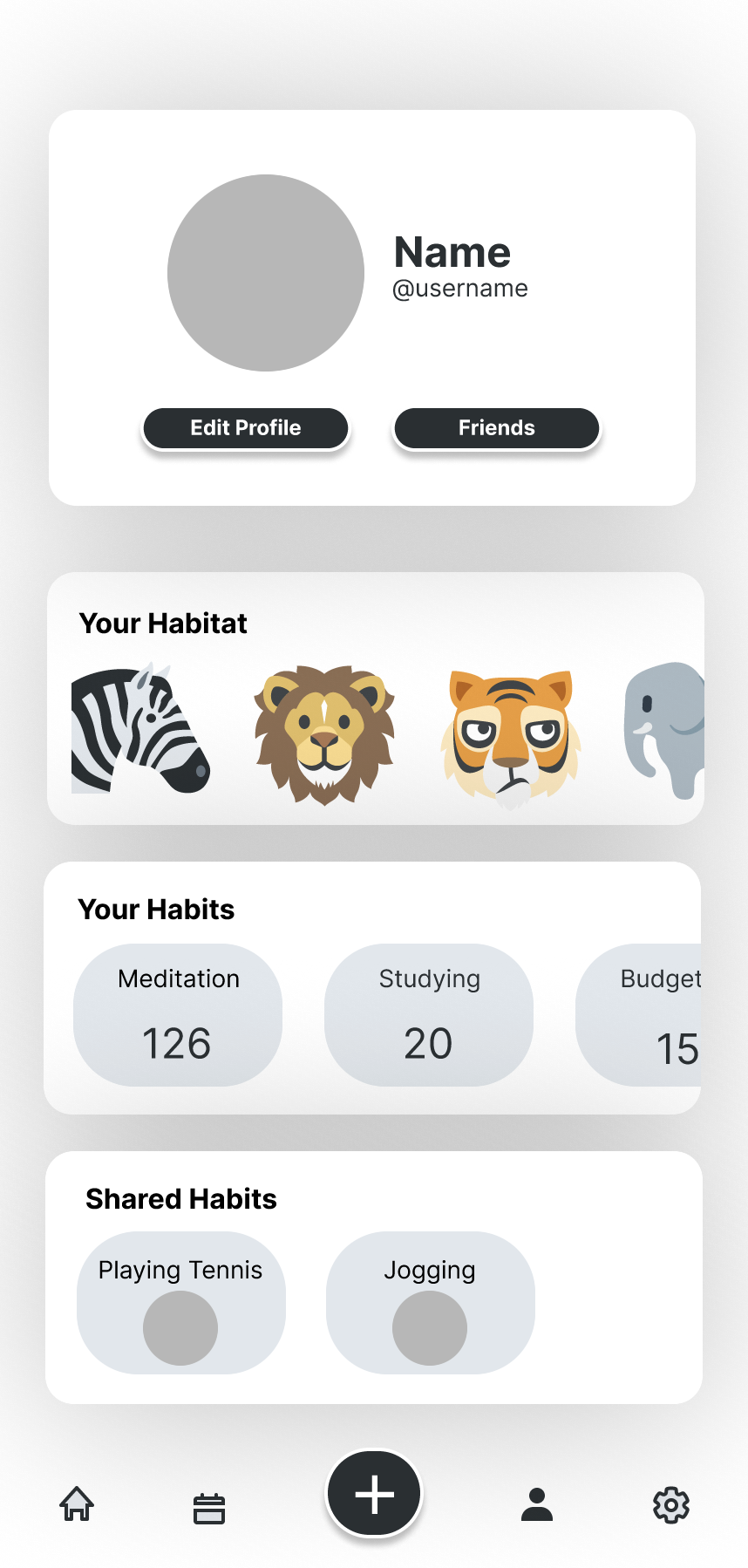
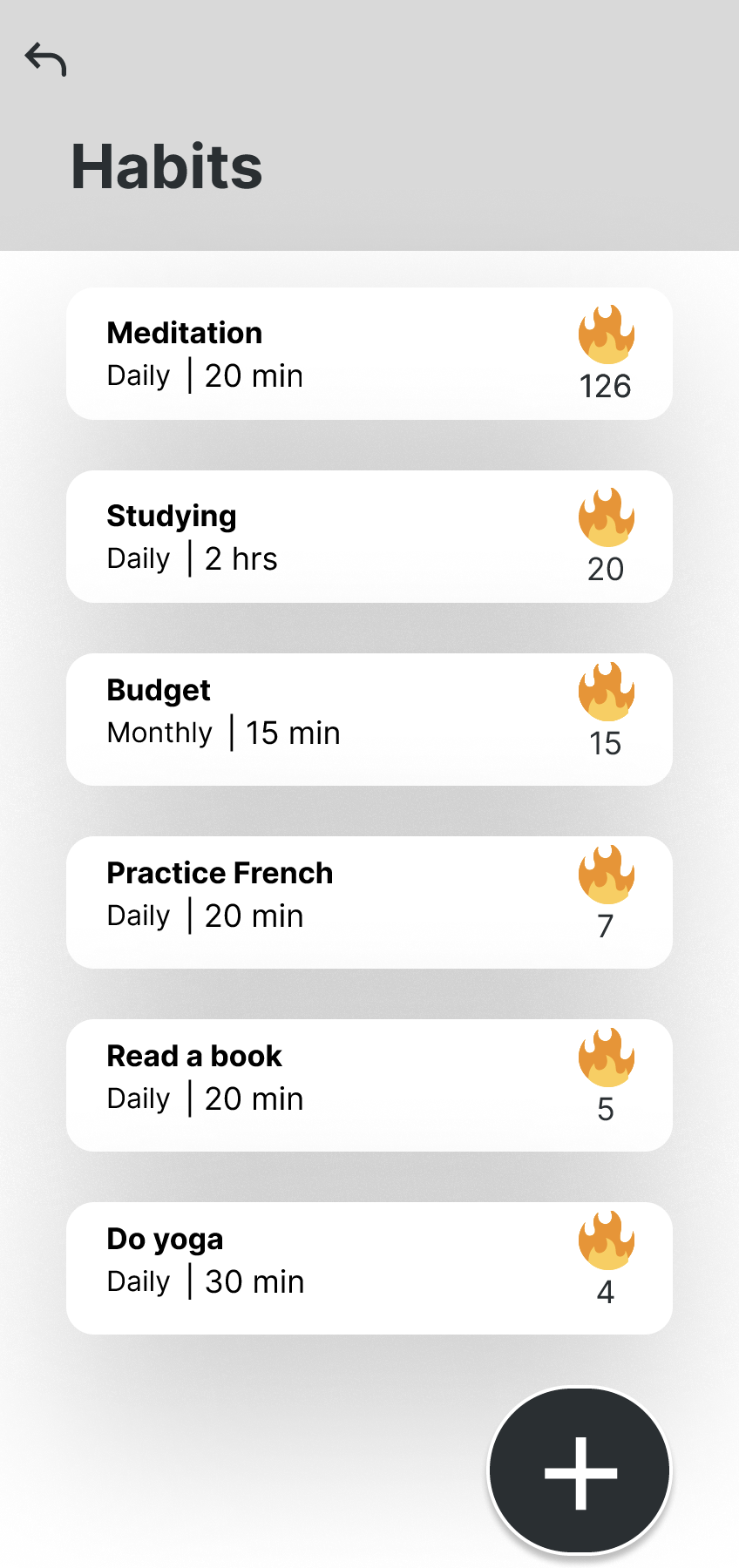
Mid-fidelity designs established the visual hierarchy and interaction patterns before moving to high-fidelity prototypes.
08
Solution
Our final solution combines two powerful motivators: a collectible reward system and social accountability features.
Why This Approach?
Research showed that college students abandon habit trackers within 2 weeks due to lack of motivation. We needed something more engaging than checkboxes.
By combining collectible rewards with social accountability, we tap into two powerful psychological drivers: the desire to collect and the fear of letting friends down.
Users who share habits with friends show 3x higher retention rates in our testing.
Reward System

Unlock animals through
habit milestones
Collaboration
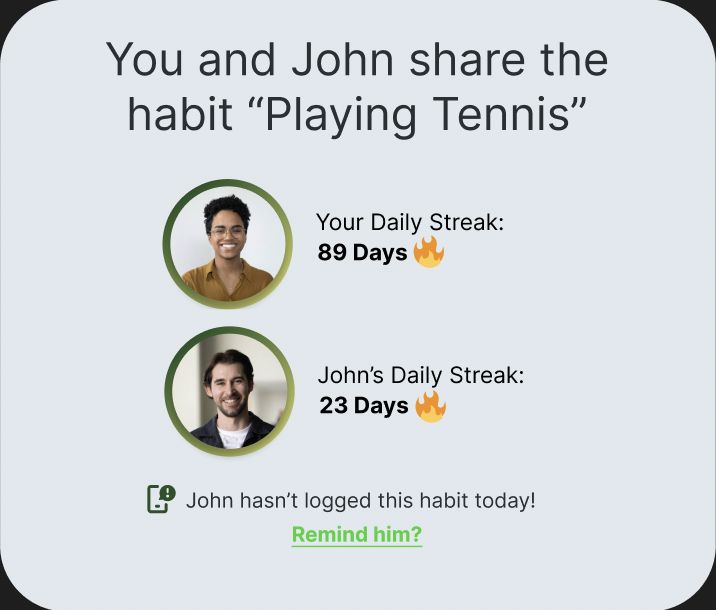
Share habits with friends
& track together
Key Design Decision
We chose collectible animals over points or badges because our research showed college students respond better to tangible, shareable rewards. The safari theme creates emotional investment that simple gamification lacks.
Most User-Centered Design
Awarded among all Design Innovation teams
Our team's deep commitment to understanding real user pain points and designing meaningful, research-backed solutions earned us this recognition.
09
Impact & Results
We validated our designs through multiple rounds of usability testing with college students.
30%
increase in user engagement during testing
🏆
Most User-Centered Design Award
94%
of testers would use HABITat regularly
User Feedback
"I actually want to open this app every day. The animals make me feel like I'm working toward something real, not just checking boxes."
— Usability Testing Participant
10
Reflection
What I Learned
- Gamification requires connecting rewards to real progress
- Social features dramatically improve retention
- User-centered design wins over assumptions
Challenges
- Balancing fun with functional habit tracking
- Coordinating designs across a 4-person team
- Creating rewards that feel earned, not arbitrary
Next Time
- Test gamification mechanics earlier
- Include more diverse habit types in research
- Build in analytics from the start
Key Insight: Habit apps fail when they focus on tracking rather than motivation. By making progress feel tangible through collectibles and social accountability, we created something users actually wanted to return to.
11
Product Walkthrough
A video walkthrough of the final HABITat prototype, showcasing the safari-themed visual design, smooth interactions, and delightful micro-animations.